An office is more than a collection of desks and chairs within an enclosed space. The way spaces are organized, how employees move through the workplace, levels of privacy, lighting, furniture, materials, and colors can all influence the daily workplace experience and the impression clients and visitors have of a company.
For this reason, office interior design aims to create an environment that balances functionality, comfort, and identity. The workplace should support employees and their working patterns while also reflecting the company's character and culture.
Whether a project involves corporate office design for a new workplace or the redevelopment of an existing office, the process should begin by understanding how the space will actually be used before selecting furniture, finishes, and visual elements.
What Are the Key Principles of Successful Office Interior Design?
Effective office design begins by analyzing the number of users, departmental requirements, working patterns, meeting needs, privacy levels, collaboration requirements, and circulation throughout the workplace.
This information can then be used to develop a layout that defines the relationship between work areas, meeting rooms, reception, support spaces, and shared facilities rather than simply arranging furniture according to the available floor area.
Space Planning and Workplace Circulation
Space planning is one of the most important decisions in workplace design because it directly affects circulation, communication, privacy, and the efficient use of available space.
Workstations, meeting rooms, private offices, reception areas, and shared spaces should be positioned according to how each area is used and how different departments interact.
Clear circulation routes should also be provided while avoiding layouts that create congestion or unnecessary interruptions within focused work areas.
In office design in Istanbul, particularly where available floor area may be limited, using every square meter efficiently becomes increasingly important without compromising employee comfort.
Lighting and Workplace Comfort
Lighting plays an important role in the quality of the working environment. Natural daylight should be used effectively wherever possible, supported by artificial lighting appropriate for different tasks and areas.
Lighting quality is not only about brightness. Distribution, glare control, visual comfort, and the requirements of employees working for extended periods should also be considered.
Workplace comfort also involves acoustics, privacy, furniture quality, and environmental conditions. The employee experience should therefore be considered as an integrated part of the overall interior design.
Office Furniture and FF&E
FF&E — Furniture, Fixtures & Equipment — represents an important part of the everyday functionality and character of an office.
When selecting office furniture, dimensions, ergonomics, flexibility, durability, and intended use should be considered alongside compatibility with the overall interior design.
Some companies may also require flexible solutions that allow work areas to be reorganized or expanded as teams grow. For this reason, workplace design should consider future adaptability rather than focusing only on current requirements.
How Can Office Design Reflect Brand Identity and Support Workplace Efficiency?
Using a company's logo colors on the walls does not automatically create a workplace that reflects its identity. A stronger sense of identity comes from the way spaces, materials, colors, lighting, furniture, and the overall employee and visitor experience work together.
Thoughtful workplace design can translate a company's values and working culture into a physical environment without relying solely on direct branding elements.
Brand Identity, Materials, and Finishes
A company's brand identity can be expressed through materials, colors, architectural details, textures, and spatial compositions that correspond with the character of the organization.
A technology company, for example, may benefit from a flexible and contemporary environment, while a consulting or financial company may require a more restrained and formal workplace.
The objective is to integrate identity naturally into the interior design language rather than treating branding as a collection of decorative elements.
User Experience and Space Efficiency
Successful office design focuses on the experience of the people who use the workplace every day.
Employees should be able to move easily between workstations, meeting rooms, support areas, and shared spaces while having appropriate levels of privacy and collaboration according to their tasks.
Evaluating the user experience can also reveal underused areas, circulation problems, and opportunities to improve the functional layout, allowing the available space to be used more efficiently.
Designing a Workplace That Supports Productivity and Collaboration
Office design can create better conditions for concentration, communication, and teamwork, but there is no single workplace model that works for every organization.
Some teams benefit from open collaborative areas, while other tasks require quiet zones, private rooms, or dedicated spaces for calls and focused work.
For this reason, office interior design in Turkey should respond to the company's actual operational needs and team structure, providing an appropriate combination of focused workspaces, collaborative areas, meeting rooms, and break spaces.
When these elements are planned together, the workplace can become more flexible, efficient, and aligned with the way employees actually use the office.
Frequently Asked Questions About Office Interior Design
What are the most important elements to consider when designing an office?
Key considerations include space planning, circulation, lighting, acoustics, privacy, office furniture, materials and finishes, brand identity, employee requirements, and the company's working patterns.
How can office design reflect a company's brand identity?
Brand identity can be integrated through materials, colors, architectural details, spatial composition, furniture, and the overall workplace experience rather than relying only on logos or corporate colors.
Why is FF&E important in office interior design?
FF&E includes the furniture, fixtures, and equipment that directly influence how a workplace functions, how comfortable it is for employees, and how the interior looks. These elements should therefore be selected according to function, design requirements, durability, and budget.
Are open-plan spaces the best choice for every office?
No. The right layout depends on the company's teams, activities, and working patterns. Open spaces can support collaboration, while some tasks require quieter areas, private offices, or enclosed rooms for concentration and privacy.
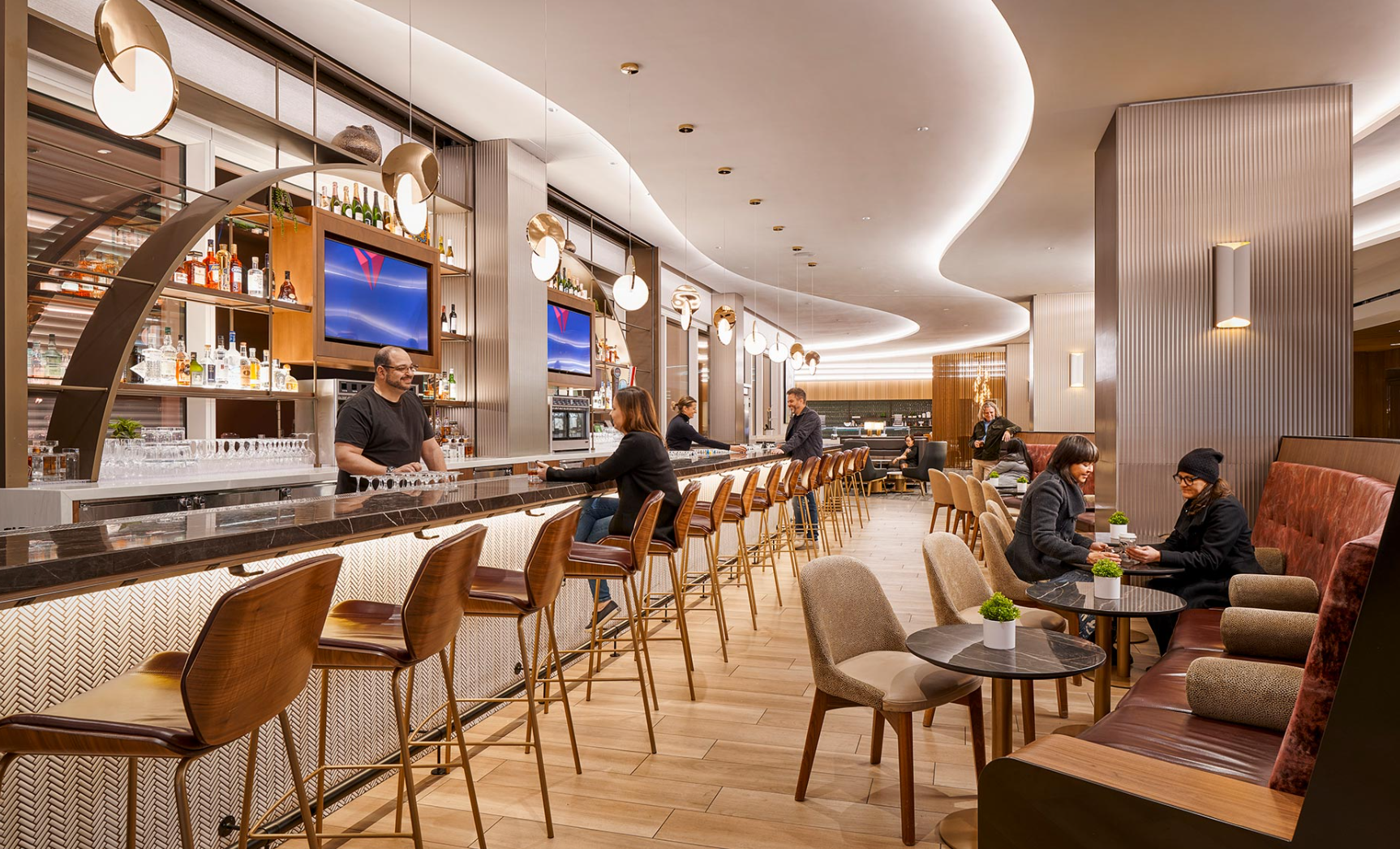
A practical guide to office interior design, covering workplace planning, lighting, materials, and furniture to create an environment that reflects brand identity and supports efficient use.